
Why Correct Event Timing Matters in Corporate Events
A corporate event can start at 3 pm, yet the event company may receive a call at 9 am asking, “Where is your team?” By then, the production crew might already be on the way, the setup plan may already include travel and technical buffer, and another client enquiry may have been declined to keep the day safe.
This happens more often than many people realise. Not because anyone wants to create confusion, but because timing gets adjusted at every level of the corporate chain.
One person adds a one-hour buffer. The next person adds another. A senior team member adds one more “to be safe”. By the time the instruction reaches the event partner, the actual 3 pm requirement has quietly become 10 am or 9 am.
That gap may look harmless from one side. For event professionals, it affects manpower, transport, equipment movement, costing, crew energy, vendor coordination, and the ability to accept other work.
Correct timing is not a small detail. It is one of the basic foundations of a successful event.
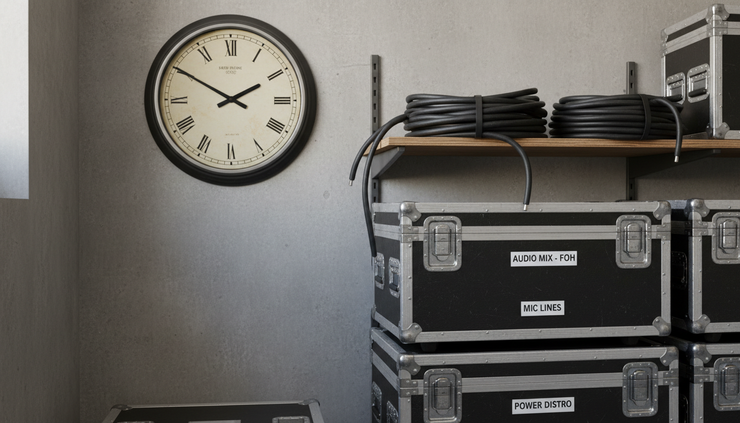
Small changes in timing create large changes on ground
In a corporate hierarchy, information rarely travels in a straight line. A simple timing instruction can pass through admin teams, managers, department heads, assistants, facility teams, security teams, travel coordinators, and finally the event company.
At each stage, someone may add extra time.
The intention is usually good. People want to avoid delay. Nobody wants a senior leader waiting for the mic to be tested or a guest arriving before the registration desk is ready. So the event time gets shifted earlier and earlier.
For example:
Actual requirement | Buffer added | Time communicated |
Event starts | 3 pm | 3 pm |
Internal team wants venue ready | 1 hour | 2 pm |
Senior manager wants extra safety | 1 hour | 1 pm |
Admin team wants vendor on standby | 1 hour | 12 noon |
Facility or security team wants early reporting | 1 hour | 11 am |
Final call to event company | 1 to 2 hours | 9 am or 10 am |
What started as a 3 pm event now feels like a morning event.
This may not look like a major issue on paper. In practice, it changes the entire working day for the event partner. Crew call time, vehicle booking, loading schedule, technician reporting, meal planning, overtime, and equipment availability may all shift.
A stage setup, sound check, branding installation, registration desk arrangement, seating layout, and lighting check do need time. But that time cannot be guessed randomly at every level. It must be planned with the event company, because they know how long each task takes.
When the wrong time is shared, the event team does not simply “come early”. They have to rearrange a whole chain of moving parts.
Event professionals already build buffer into their plan
A common misunderstanding is that vendors need to be told a much earlier time, otherwise they will come late. Good event professionals do not work like that.
They already calculate buffer for:
Traffic delays
Loading and unloading time
Security checks at the venue
Lift or service entry access
Power connection delays
Sound and light testing
Last-minute layout changes
Vendor coordination
Rain, heat, or other local conditions
Waiting time for approvals
In India, this planning becomes even more important because venue conditions can vary widely. A hotel ballroom, factory premises, college auditorium, open lawn, mall atrium, and convention centre all need different preparation times. Some venues allow vehicle entry close to the setup area. Others require equipment to be carried over a long distance. Some have fixed power points. Others need more time for power distribution.
An experienced event team checks these details before committing to a reporting time. They may ask for venue access, loading permission, power availability, setup scope, rehearsal time, and guest arrival time. These questions are not formalities. They help create a realistic schedule.
When a client shares the actual event time and the expected ready time clearly, the event company can create a proper plan. When the client shares an inflated time, the plan becomes wasteful.
There is a difference between planned buffer and panic buffer.
Planned buffer is calculated. Panic buffer is added out of fear. Planned buffer protects the event. Panic buffer creates confusion.
Wrong timing wastes money, labour, and opportunity
An event company is not only selling decoration, sound, lights, stage, or manpower. It is also selling time.
A crew member assigned to one event cannot be present at another event. A set of speakers sent to one venue cannot be used at another venue at the same hour. A transport vehicle blocked from morning cannot serve another client in the same slot. A production supervisor waiting unnecessarily for five hours loses energy that may be needed during the main event.
That is why wrong timing has a real cost.
If the team is asked to report five or six hours earlier than required, several things can happen.
The crew spends long hours waiting.
This affects energy and alertness. Events often require peak focus during guest arrival, performances, announcements, award segments, or leadership addresses. If the team has already been waiting since morning for an evening function, fatigue shows.
Equipment remains blocked for longer.
Sound systems, LED screens, lights, consoles, truss, branding material, décor items, and generators may be scheduled across multiple events. Extra blocking reduces availability.
Another business opportunity may be lost.
If an event company believes its crew and equipment are needed at 9 am, it may reject another valid booking for the morning. Later, when it becomes clear that the actual work was needed much later, the lost business cannot be recovered.
Costs become harder to control.
Early reporting may increase labour hours, transport waiting charges, meal requirements, and overtime. Sometimes these costs are visible in the quotation. Sometimes they are absorbed by the event partner to maintain the relationship. Either way, someone pays for the inefficiency.
Trust gets affected.
When the gap between shared timing and real timing becomes too wide, event partners may start double-checking every instruction. This slows down communication and creates unnecessary back-and-forth.
Good event management depends on trust. Accurate timing keeps that trust strong.
Correct timing helps everyone plan better
The solution is not to remove buffer. Buffer is necessary. The solution is to share the difference between the actual event time, internal ready time, and vendor reporting time.
These are not the same.
The actual event time is when the event starts for participants or guests.
The ready time is when the setup should be complete and checked.
The vendor reporting time is when the event team should physically reach the venue to begin setup.
The rehearsal or dry run time is when content, sound, lights, presentations, cues, or performances must be tested.
The guest arrival time is when people may begin entering the venue.
When these times are clearly shared, the event company can work backwards and define a practical schedule.
For example, a simple corporate event could be communicated like this:
Timing detail | Clear instruction |
Guest arrival | 2:30 pm |
Event start | 3 pm |
Setup ready | 1:30 pm |
Sound check | 1:45 pm |
Internal walkthrough | 2 pm |
Vendor access allowed | 10:30 am |
Heavy unloading allowed | 10 am to 11 am |
Venue contact available | From 9:30 am |
This is far better than saying, “Please come by 9 am, event is in the afternoon.”
A clear schedule gives the event partner room to decide how many people should arrive early, who can come closer to show time, which equipment must be delivered first, and what can be installed later. It also helps the client avoid paying for unnecessary waiting.
Corporate events often involve many teams. Admin, HR, marketing, facility, security, finance, leadership support, and external vendors may all have a role. A timing sheet keeps everyone aligned.
It also avoids the classic last-minute confusion where one person says the stage must be ready at 11 am, another says 12:30 pm is fine, and a third says the senior team will come at 2 pm only.
In events, clarity saves more time than pressure.
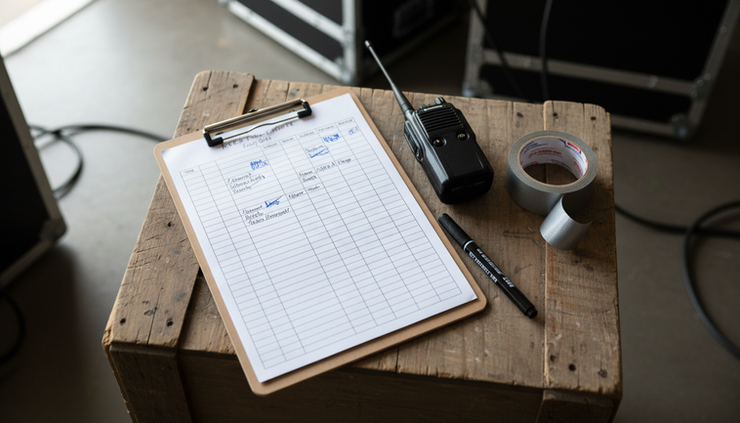
How to communicate timing without confusion
A better timing process does not need complex software. It needs honest information and one owner.
Start by sharing the real event start time. Do not hide it behind an inflated reporting time. If the event begins at 3 pm, say it begins at 3 pm.
Next, discuss the setup scope with the event company. A small audio setup needs less time than a stage with truss, lights, LED wall, registration counters, photo area, and décor. A rehearsal-heavy event needs more pre-event time than a simple networking session.
Then agree on these points in writing:
Venue access time
Loading and unloading time
Setup start time
Setup completion time
Technical check time
Rehearsal time
Guest arrival time
Event start time
Expected event end time
Dismantling time
This protects both sides. The client knows what to expect. The event company knows what to prepare.
One more step helps a lot. Share the reason behind special time requirements. If the team must reach by 9 am because security clearance closes at 9:30 am, that is useful information. If they are being called at 9 am only because someone higher up added a buffer, the event partner should know the actual need and can suggest a better time.
Corporate teams can also reduce confusion by avoiding multiple unofficial timing instructions. When five people call the event company with five different times, the team on ground wastes energy confirming which one is correct. Assign one event coordinator as the timing authority. Others can share updates through that person.
A clean timing message can look like this:
“The event starts at 3 pm. Guests may enter from 2:30 pm. We need the setup fully ready by 1:30 pm. Venue access is available from 10 am. Please confirm your reporting time based on this.”
This kind of message respects the client’s need for safety and the event partner’s need for planning.
Early is good only when it is planned
Nobody in the event industry treats time lightly. Event professionals know that a delayed setup can damage the entire experience. They know that a microphone failure, a late backdrop, a missing name board, or an incomplete registration counter can create pressure for everyone.
That is why serious teams prefer to arrive with enough time in hand. They build schedules backwards from the event start. They know when the truck must leave, when the crew must report, when equipment must be tested, and when standby time should begin.
But calling a team five or six hours early without a real need is not the same as smart planning.
It can create avoidable strain. It can increase costs. It can block people and equipment that could have served another client. It can also make the event day longer than necessary for the very people who need energy when the event goes live.
Early reporting is useful when:
The setup is large or complex
Venue access is difficult
Security checks take time
There is a rehearsal
Multiple vendors must work in sequence
The event has senior guests and zero room for delay
Weather or traffic risk is high
The venue has strict loading slots
Early reporting is wasteful when:
It is added only because every level added a buffer
The venue will not allow setup at that hour
The required equipment is minimal
The event company has already planned a safe setup time
No one from the client side is present to give access or approvals
The actual event start time has not been clearly shared
The goal is not to make the vendor come as early as possible. The goal is to make the event ready at the right time, with the right quality, without waste.
The best events respect everyone’s time
A successful corporate event is not built only on stage design, décor, sound, lights, hospitality, or guest management. It is built on coordination. Timing sits at the centre of that coordination.
When correct timing is shared, the event company can plan better. The client gets a smoother setup. Crew members work with better focus. Equipment is used wisely. Costs stay controlled. Other potential business is not unnecessarily lost.
Most event professionals are not asking for less time. They are asking for the correct time.
Share the actual start time. Share the required ready time. Explain the real constraints. Let the event team add the right buffer based on experience. That simple habit can save hours, reduce stress, and improve the quality of the entire event.
In corporate events, being safe with time is wise. Being unclear with time is costly.


Comments